
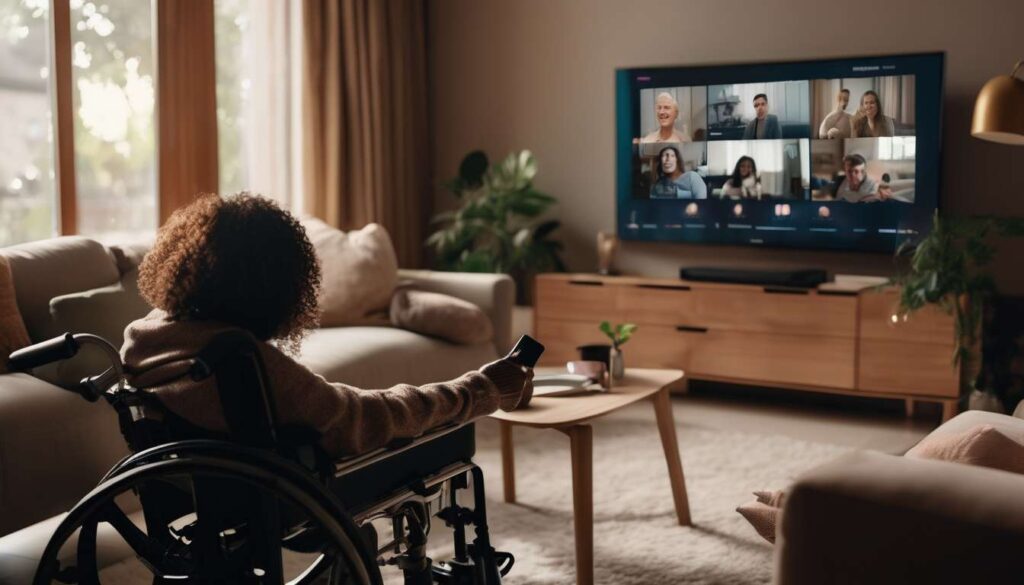
I never thought the principles that guide museum accessibility would shape how we design adult movie streaming services, yet the overlap is profound and necessary.
Accessibility isn’t just a legal checkbox but a practice rooted in dignity, clarity, and intention—values museums have long refined to welcome diverse audiences.
Translating museum practices into streaming design forces us to rethink multiple areas:
- Metadata — apply the same precision as tactile signage so content is discoverable and understandable.
- Audio description timing — borrow descriptive tour pacing to make narration clear and non-disruptive.
- Intuitive controls — adapt curated wayfinding into player interfaces that people of all abilities can use.
As designers, developers, and advocates working together, we can borrow human-centered methods to improve adult streaming platforms:
- Co-design sessions with people who have lived experience of disability.
- Multisensory cues that combine audio, visual, and haptic signals.
- Layered information architecture so users can access simple or detailed info as needed.
This connection pushes us to prioritize concrete interface features:
- Accessible playback controls — keyboard focus, large targets, and customizable shortcuts.
- Clear content warnings — concise, machine- and human-readable labels that respect consent and privacy.
- Adaptable navigation — multiple paths to content (search, filters, curated lists) and consistent layout.
- Respectful user settings — granular privacy and consent options that preserve autonomy and safety.
By treating accessibility as design intelligence, we ensure equitable access to intimate media experiences without sacrificing safety, autonomy, or user agency.
User-Centered Research
We’ll begin by interviewing diverse viewers and stakeholders to identify real accessibility barriers, needs, and priorities for adult movie streaming.
We’ll listen to people with varying abilities, ages, cultures, and relationship experiences so we can build services that welcome everyone.
We’ll ask about audio description preferences, tactile or haptic cues, caption quality, and user controls so we can prioritize features that truly improve access.
We’ll test prototypes with participants who rely on screen readers, mobility aids, or alternative input methods, and we’ll gather measurable feedback on task success and satisfaction.
We’ll also explore content labeling and tagging approaches to ensure inclusive metadata supports discovery without outing or stigmatizing users.
We’ll analyze patterns across interviews and usability tests to set clear, evidence-based requirements for developers, producers, and product teams.
We’ll share findings transparently and involve community members in prioritization, so our roadmap reflects lived experience and builds trust.
We’ll iterate continuously, treating accessibility as an ongoing collaboration rather than a one-time checklist.
Inclusive Metadata
We’ll create consistent, respectful metadata and tagging systems that help people find content by desire, boundaries, and format without forcing labels that could out or stereotype them.
We’ll adopt inclusive metadata standards that balance specificity with privacy, letting viewers filter by:
- themes
- consent cues
- accessibility features
- format
We’ll ensure tags do not expose identities and make accessibility markers (accessible streaming options and audio description availability) prominent in search and browse views.
We’ll co-design taxonomies with diverse users so tags reflect how people actually talk about desire and limits, avoiding clinical or stigmatizing language.
We’ll let users opt into personalized recommendations and saved filters, and we’ll store preference data securely and respectfully.
We’ll monitor tag usage and complaints to refine terms and retire problematic labels.
By centering belonging and dignity, our inclusive metadata will make discovery intuitive and safe while supporting accessible streaming experiences for everyone.
Accessible Player Controls
Goal: design fully accessible player controls that work with keyboard, screen readers, switch devices, and voice commands so every viewer can play, navigate, and customize playback without barriers.
Provide clearly labeled, focus-visible controls and a logical tab order so users relying on assistive tech can find essential controls quickly.
- Play, pause, and scrub controls are keyboard operable and reachable in a predictable sequence.
- Volume, captions, and audio-description toggles are included in the tab order and receive clear focus outlines.
- Focus order follows visual and semantic layout to avoid confusion.
Expose ARIA roles, states, and announcements to assistive technology so changes are communicated.
- Use appropriate ARIA roles (button, slider, menu, checkbox, etc.).
- Update ARIA states (aria-pressed, aria-valuenow, aria-expanded) when controls change.
- Announce dynamic changes (e.g., “captions enabled,” “playback speed 1.5x”) so screen-reader users are informed.
Make labels reflect inclusive metadata so people understand content options before they start.
- Provide descriptive labels and accessible names (e.g., “English captions (SDH),” “Audio Description — English”).
- Expose language, version, and content warnings in accessible form.
Design touch targets and gestures with accessibility in mind.
- Make touch targets large and well spaced; gestures are optional.
- Provide alternative, non-gesture controls for all gesture actions.
Offer switch-device friendly navigation patterns.
- Support single-switch scanning and multiple-switch input patterns.
- Provide an alternate, linear control layout optimized for switch scanning.
Provide voice-command hooks for hands-free control.
- Allow commands to play/pause, jump to scenes, change speed, enable audio description, toggle captions, and adjust volume.
- Use consistent, discoverable command phrases and expose a command reference.
Include persistent, user-configurable settings tied to accounts.
- Allow users to save preferences for captions, contrast, playback speed, and audio description.
- Apply saved preferences across sessions and devices when authenticated.
Make error states explicit and recoverable.
- Surface clear, actionable error messages (e.g., “Failed to load captions — retry or select another track”).
- Provide fallback controls and step-by-step recovery instructions.
Outcome: create an accessible streaming experience that honors diversity, supports independence, and helps every member of the community engage confidently with content.
Clear Content Warnings
We will provide clear, concise content warnings up front so viewers can make informed choices before playback begins.
Key elements to include:
- Specific triggers listed in plain language.
- Duration estimates for how long the content or scene lasts.
- Severity levels to indicate intensity.
Goal: Create an inclusive space where people trust the information we present and can decide whether to view.
We will integrate warnings into accessible streaming workflows and inclusive metadata so they’re searchable, filterable, and visible across devices.
Implementation details:
- Consistent wording; avoid vague labels.
- Metadata tags that support search and filtering across platforms.
- Visibility across devices and breakpoints.
We will allow users to customize how warnings appear.
Options users can choose from:
- Brief banners before playback.
- Expanded detail panels.
- Summaries formatted for screen readers.
We will coordinate warnings with availability of alternate formats (e.g., audio description), without describing auditory tracks here.
User-facing clarity:
- Indicate when alternate formats exist.
- Ensure warnings reference availability of those formats without duplicating descriptions.
We will solicit community feedback and update warning categories and tags promptly.
Process for refinement:
- Collect community and accessibility expert feedback regularly.
- Update categories and tags based on input and evidence.
- Communicate updates to users and make changes discoverable.
We will standardize warning practices and include clear opt-out choices.
Outcome: By standardizing and offering opt-out controls, we’ll help everyone—regardless of background or needs—feel they belong and can confidently choose what they watch.
Audio Description Options
We’ll offer multiple audio description options so viewers can choose narration style, verbosity, and timing that best fit their preferences and needs.
- We will provide concise and extended tracks, character-voiced and neutral narrations, and adjustable sync to respect pacing without assuming one size fits all.
By centering accessible streaming, we make sure blind and low-vision users aren’t sidelined; everyone can find descriptions that feel comfortable and respectful.
We’ll label each audio description clearly in player controls and in inclusive metadata so users can filter and preview before playing.
- Labels and metadata will make it easy to filter, preview, and select the preferred description before playback.
Our team will standardize description quality, train describers on respectful language for intimate content, and provide samples to build trust.
- Standardization will cover tone, verbosity levels, and sync standards.
- Training will emphasize respectful, non-sensational language, especially for intimate or sensitive scenes.
- Providing samples allows users to assess clarity and tone before committing to a track.
We’ll let users save preferred description profiles and send feedback on clarity or tone.
- Saved profiles reduce friction by remembering users’ preferred narration style, verbosity, and sync settings.
- Feedback channels enable continuous improvement based on real user experience.
These measures foster belonging by acknowledging varied needs and preferences, reducing friction when choosing how to experience content, and ensuring audio description is an integral, customizable part of the streaming experience rather than an afterthought.
Multisensory Navigation
We’ll add multisensory navigation—combining haptic cues, spatial audio, and customizable visual contrasts—to help users orient, browse, and control playback more effectively.
Design tactile feedback that signals menu levels and confirmation.
- Tactile patterns for hierarchy: distinct short/long vibrations to indicate primary vs. nested menus.
- Confirmation pulses: brief, distinct feedback when actions complete (play, pause, save).
- Adjustable intensity and cadence so users can tune sensations to preference and device capability.
Pair spatial audio landmarks with audio description cues for scene previews.
- Use spatialized sounds to indicate position (left/right/behind) of UI elements and content thumbnails.
- Provide short audio-description snippets tied to those landmarks for quick scene/context previews.
- Offer volume/balance controls and an option to disable spatialization when it interferes with other audio.
Let users set color and contrast profiles so visuals match their needs.
- Predefined accessible themes (high contrast, low-light, color-blind friendly).
- Customizable sliders for contrast, saturation, and text size.
- Live preview before applying a profile and per-profile persistence.
Surface inclusive metadata so everyone finds content labeled by preferences, orientation, and accessibility features without extra friction.
- Clearly display tags for captions, audio description, language, content warnings, and recommended interaction modes.
- Provide filters and smart suggestions based on saved user profiles and past behavior.
- Ensure metadata is machine- and human-readable for interoperability with assistive tech.
Make gestures and voice shortcuts consistent across devices and provide clear settings to tune intensity, verbosity, and timing.
- Standardize a core set of gestures/voice commands for navigation and playback control.
- Settings to adjust feedback verbosity (brief vs. detailed), haptic intensity, and speech rate.
- Cross-device sync of shortcuts and preferences when users opt in.
Test with diverse users to ensure haptics aren’t confusing, spatial audio isn’t overwhelming, and contrast options respect personal comfort.
- Conduct usability tests with people across sensory profiles, ages, and device types.
- Iterate on patterns that cause ambiguity or discomfort.
- Measure task success, subjective comfort, and error rates.
Document behaviors plainly and let users save profiles, creating a welcoming environment where people feel seen and in control.
- Simple, accessible help pages and quick in-product guidance.
- Ability to create, name, and switch profiles (e.g., “Low Vision,” “No Haptics,” “High Verbosity”).
- Export/import profiles for sharing or transferring between accounts.
By integrating multisensory signals with accessible streaming practices, we’ll make discovery and playback efficient, respectful, and reliably usable for our whole community.
Privacy and Consent Controls
We’ll give users clear, granular controls over what data we collect, how it’s used, and when consent can be withdrawn.
Users can opt in or out of:
- data tied to profiles
- viewing history
- recommendation algorithms
We’ll provide plain-language explanations of the impact of each choice on accessible streaming features, for example how disabling certain data affects personalized audio description suggestions.
We’ll let people control sharing of demographic or preference data used to build inclusive metadata.
We’ll offer quick toggles to anonymize or delete those records, so users can remove personally identifiable information without losing broader accessibility benefits.
Consent flows will be reversible and centralized.
This makes it easy for anyone in our community to change choices without hunting through menus, reducing friction and encouraging ongoing engagement with accessibility features.
We’ll provide accessible consent dialogs compatible with assistive technology, including screen readers and keyboard navigation.
Audio description samples and metadata previews will respect the user’s consent settings, so previews reflect the data-sharing choices users made.
We’ll log consent events securely and give users clear records, reinforcing trust and belonging while protecting privacy in ways that directly support accessibility goals.
Ongoing Accessibility Testing
Continuous real-world testing with diverse users and assistive technologies.
We’ll run continuous, real-world accessibility testing with diverse users and assistive technologies to catch regressions and inform iterative improvements.
Schedule regular test sessions.
- We’ll schedule regular test sessions with people who use screen readers, switch devices, captions, and audio description so we can verify accessible streaming end-to-end.
- We’ll treat feedback as essential data, logging issues, prioritizing fixes, and confirming resolution with the same participants whenever possible.
Automate regressions, but pair with human review.
- We’ll automate regression checks for keyboard navigation, high-contrast modes, and semantic markup.
- We’ll pair automation with human review for subjective elements like audio description quality and inclusive metadata accuracy.
Involve content teams and test content discovery.
- We’ll involve content teams to ensure inclusive metadata is consistent and searchable.
- We’ll test content discovery flows for people using assistive tech.
Transparent metrics and governance.
- We’ll report metrics transparently — issue age, resolution rate, and user-reported satisfaction.
- We’ll create a rotating accessibility council from staff and community members to guide priorities.
Combined approach for lasting accessibility.
By combining lived experience, automated tests, and clear accountability, we’ll keep our platform genuinely usable and welcoming for everyone.
How can accessibility features be tailored for users with fluctuating or situational disabilities (e.g., temporary impairment, tiredness, or medication effects) without overwhelming the interface?
We’re asking how to support users with fluctuating or situational disabilities without cluttering the interface.
Offer a few adaptable, simple options:
- Lightweight presets (low-stimulus, high-contrast, larger controls)
- Quick toggle gestures for fast changes
- Context-aware suggestions that surface only when needed
Remember and let users personalize:
- Save remembered preferences automatically
- Let users save custom modes they can revisit
Provide gentle, non-intrusive assistance:
- Calming prompts and brief guidance when users appear to need help
Goal: Make the experience flexible, respectful, and easy to personalize without overwhelming anyone.
What steps should be taken to ensure third-party content (user uploads or partner libraries) meets the service’s accessibility standards and who is responsible for remediation?
Current Question: Ensuring third-party content meets our accessibility standards and assigning remediation responsibility.
Approach: We will require submission guidelines, perform automated and manual accessibility checks, and collect metadata for captions/descriptions.
Partnership & Support:
- We will partner with creators to fix issues.
- We will offer tooling and training to help creators meet standards.
Enforcement:
- We will enforce compliance via contracts and takedown policies.
- We will hold contributors accountable for initial fixes and timely cooperation.
Ownership of Remediation: Ultimately, the platform will own platform-level remediation while holding contributors responsible for initial fixes and timely cooperation.
How do accessibility features interact with age verification and legal compliance measures specific to adult content, and how can they be implemented without compromising access control?
Goal: Ensure accessibility features coexist with age verification and legal checks without weakening access control.
Design approach: Verify age first, then grant authenticated access to accessible interfaces and content.
Data minimization and session handling
- Store minimal verification data.
- Use tokenized sessions so verification status is represented by short-lived tokens rather than persistent, sensitive records.
Access control
- Apply role-based access to assistive features and content so users receive only the capabilities they are entitled to.
Training and partnerships
- Train staff and partners on privacy-preserving remediation and how to support users requiring accessibility accommodations.
Governance and compliance
- Audit systems regularly to ensure ongoing alignment of compliance and inclusion, and to detect regressions or abuse.
Conclusion
You’ve got the power to make adult streaming inclusive by centering users, tagging content clearly, and building accessible players.
Center users:
- Prioritize user needs through research with diverse audiences, including people with disabilities.
- Use participatory design and testing so features solve real problems.
Tag content clearly:
- Provide comprehensive, standardized tags for content type, intensity, and accessibility features (e.g., audio description, captions, sensory flags).
- Surface clear content warnings and allow users to filter or opt out before playback.
Build accessible players:
- Ensure keyboard and switch-device navigation, focus indicators, and screen-reader compatibility.
- Offer adjustable playback speed, text size, contrast, and color-customizable controls.
Offer audio description and multisensory navigation:
- Provide high-quality audio description tracks and make them easy to enable.
- Offer alternative navigation cues (haptic, visual summaries, chapter markers) for people who rely on non-visual signals.
Provide clear content warnings so everyone can decide and enjoy safely:
- Present warnings prominently before content starts, with concise language and severity levels.
- Allow users to save preferences for what warnings they want to see.
Prioritize privacy and consent controls:
- Minimize collected data and offer granular consent for recording, sharing, and personalization.
- Provide anonymous or pseudonymous options and clear, accessible privacy explanations.
Keep testing with real users to catch issues early:
- Run ongoing usability and accessibility tests with diverse participants, iterate fast, and publish accessibility roadmaps.
- Monitor analytics for barriers and solicit direct feedback channels.
When you commit to these practices, you’ll create a respectful, usable experience that serves diverse needs and builds trust across your audience.